 01
01Preparation
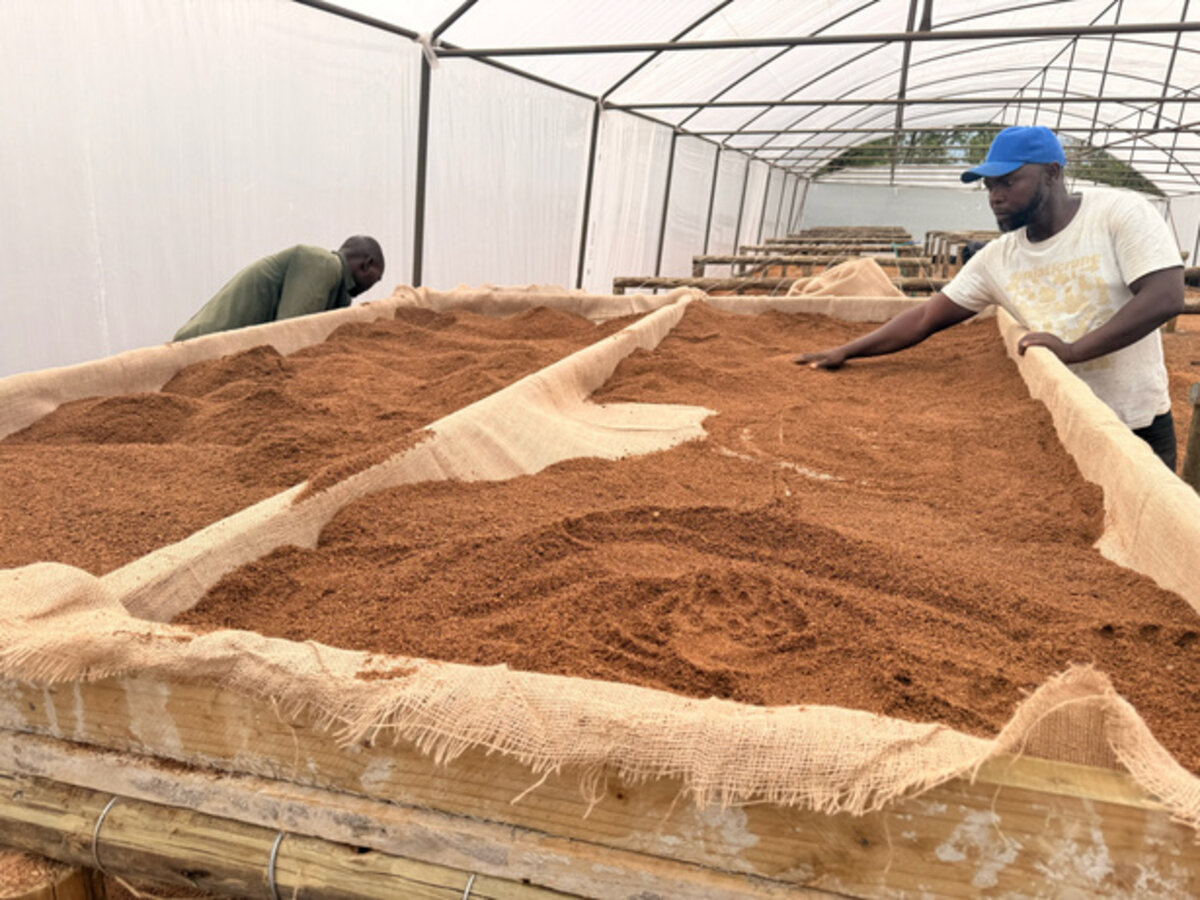
The greenhouse, custom grow benches and propagation beds are prepared to create a clean, controlled growing environment.
 Grand Valley FarmFarm 588 · EswatiniFarm journal ↗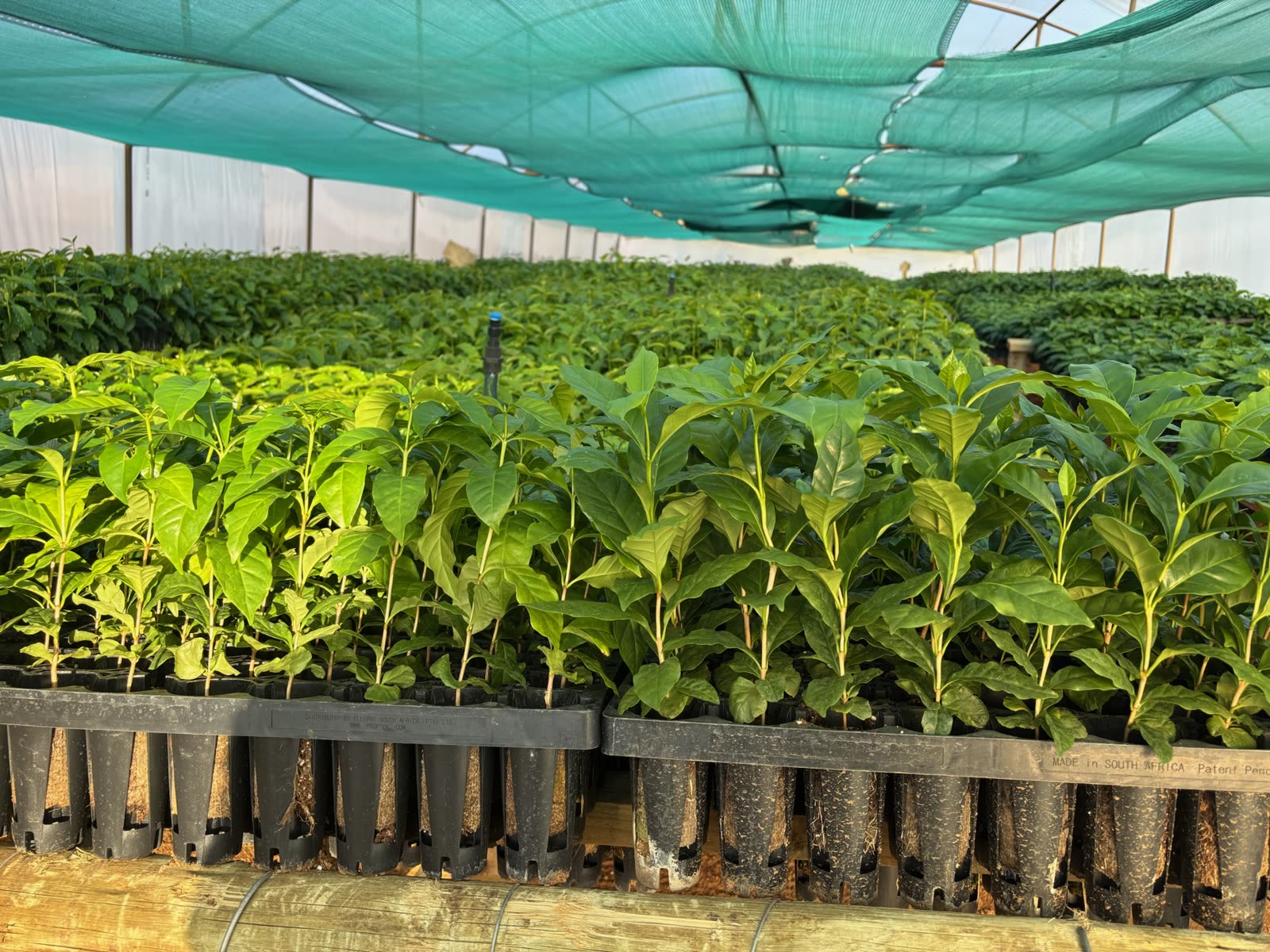
The on-farm nursery · Farm 588
Protected propagation, careful plant selection and stronger root systems support consistent field establishment at commercial scale.
Explore the process ↓Grown with care from the start
Grand Valley's nursery exists first to serve the commercial estate: producing reliable, traceable planting material near the land where it will be established.
Selected surplus trees are also offered to regional growers, supporting a wider coffee-growing base while the estate continues its own planting programme.
The propagation journey
Protected cultivation and hands-on care take every plant from prepared seedbed to stable root plug.
01The greenhouse, custom grow benches and propagation beds are prepared to create a clean, controlled growing environment.
 02
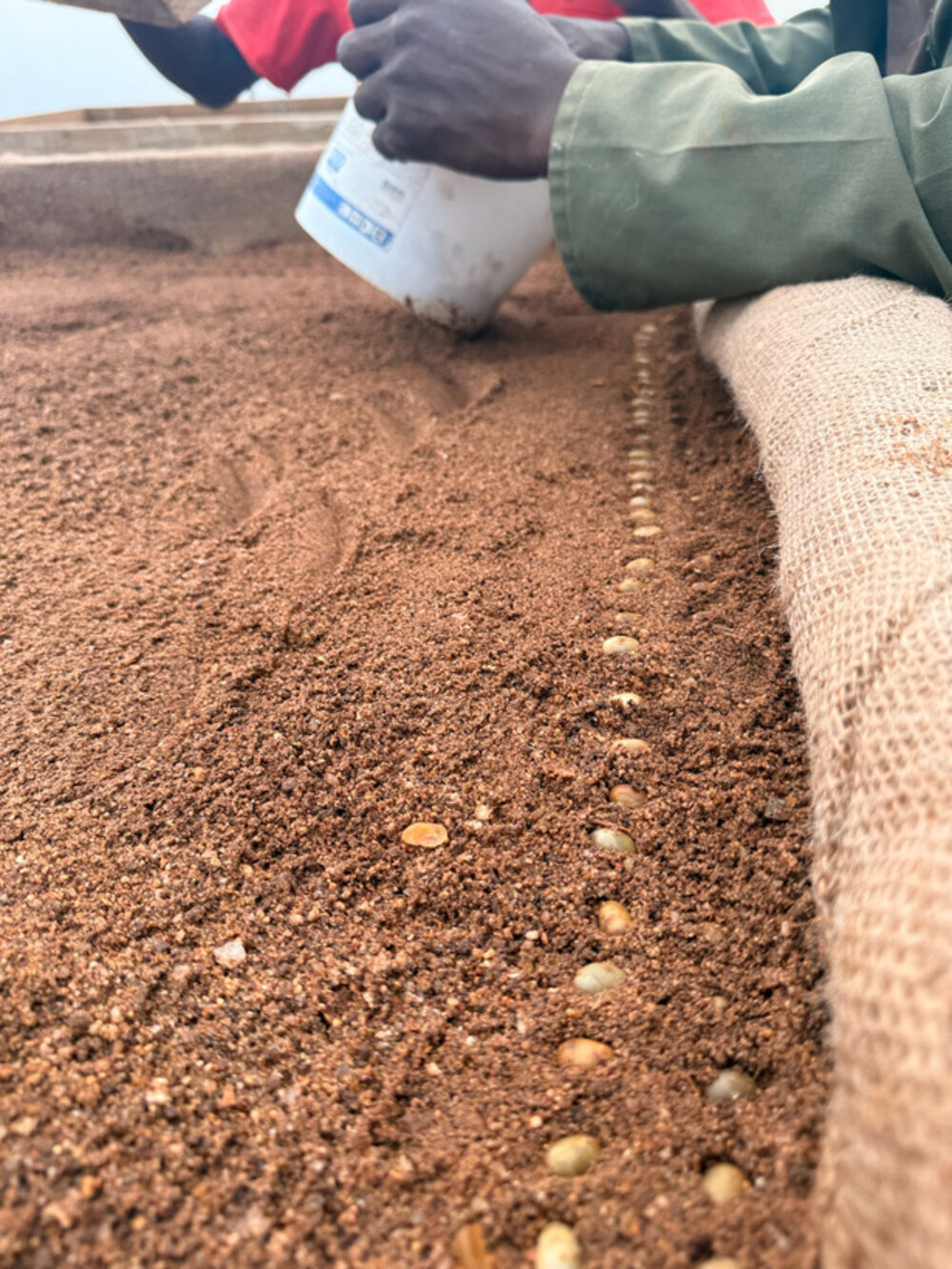
02Selected Batian, SL34 and Catimor F6 seeds are planted by hand in prepared beds for consistent germination.
 03
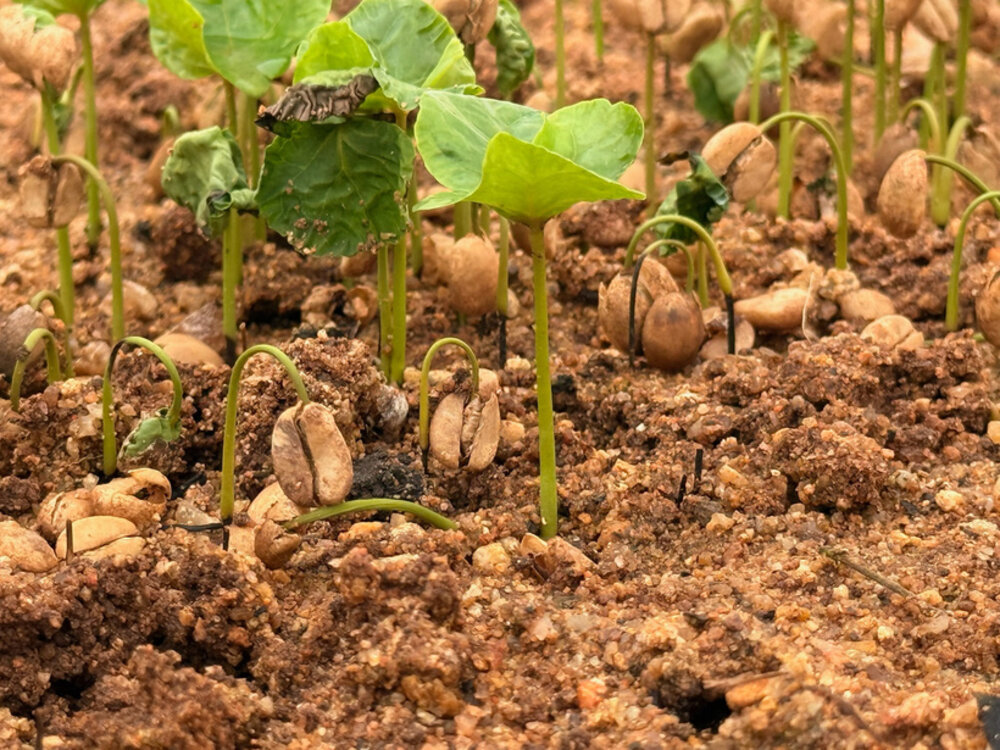
03Young seedlings emerge beneath protective shade, where moisture and growth are monitored through early development.
 04
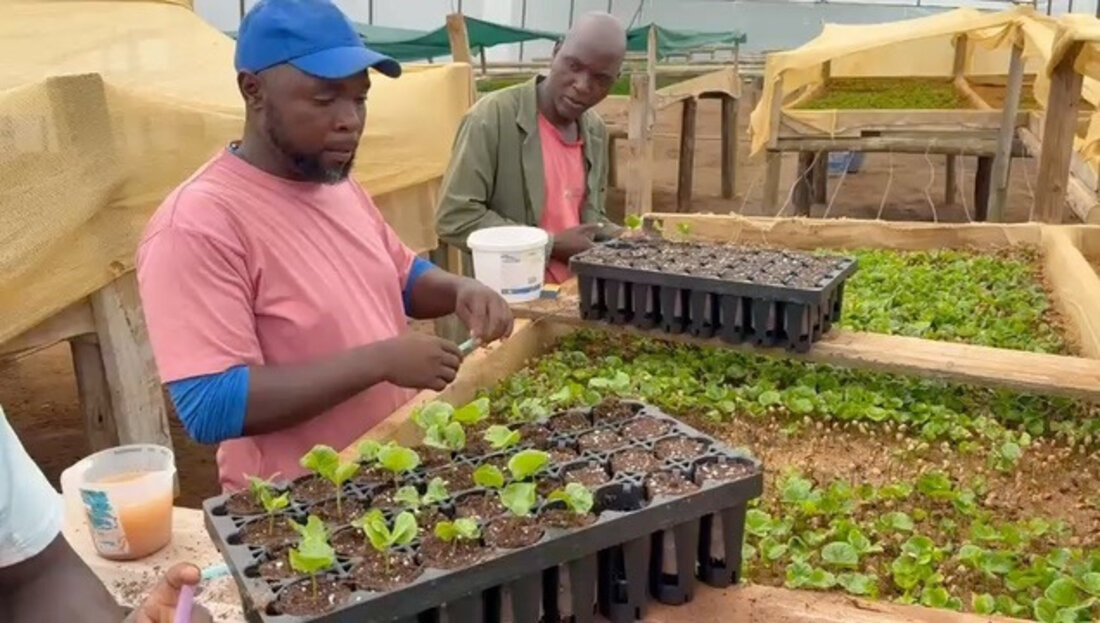
04Healthy seedlings move into degradable Ellepot paper pots designed to support faster, healthier root development and consistent plugs.
 05
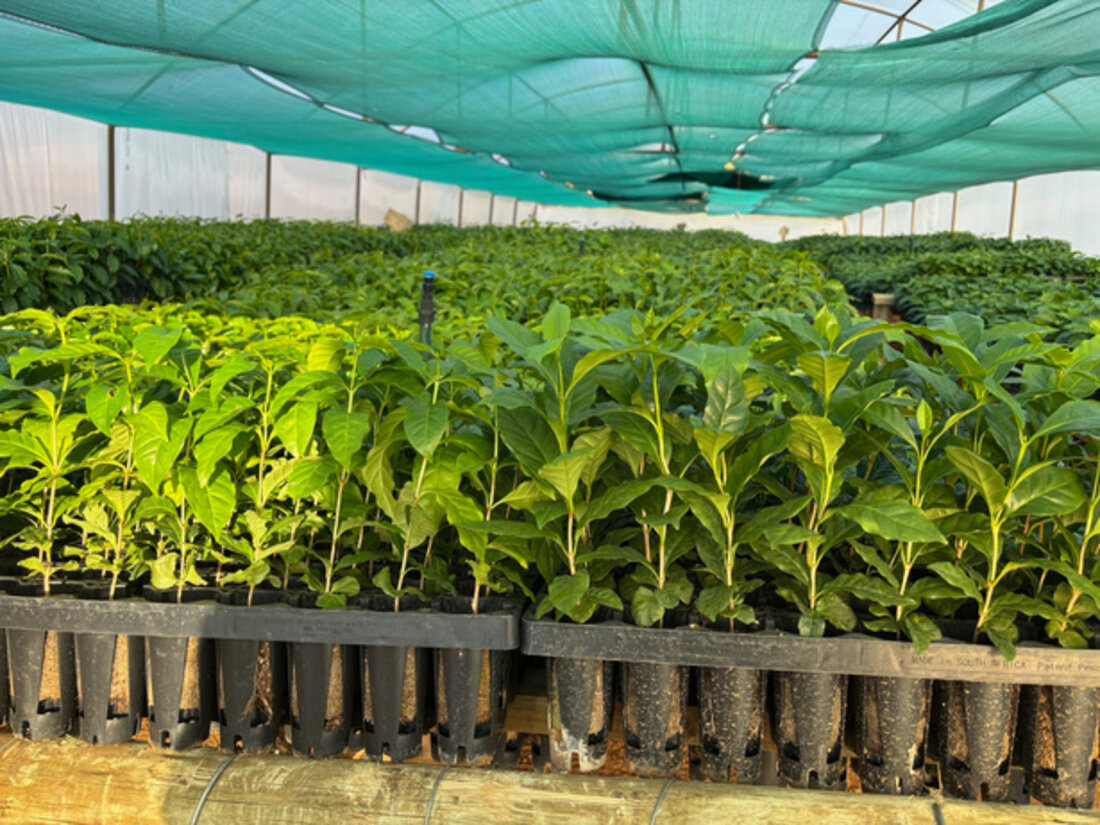
05Established trees leave the nursery with developed root plugs, ready for transition to their permanent field environment.
 Official system used at Farm 588 ↗
Why Ellepot?
The Ellepot® system combines degradable paper pots with purpose-designed trays. The paper pot can be planted together with the tree, reducing root disturbance during handling and field establishment while avoiding the need to remove and discard a conventional plastic nursery bag.
Ellepot reports that a Colombian coffee-production case reduced propagation time from approximately eight months to five months using a specified Ellepot® configuration. This is an external case-study result, not a performance claim for Grand Valley Farm.
Read the Ellepot coffee case study ↗Ellepot® is a registered trademark of Ellepot A/S. Grand Valley Farm is an independent user of the propagation system.
Three planting propositions
Each variety brings a different commercial strength. The right choice depends on site conditions, market ambition, management intensity and the grower's balance between cup quality and productive resilience.
Balanced for quality, yield & resistance
A modern Kenyan Arabica cultivar released in 2010, developed to combine strong production, very good cup quality and protection against two of coffee's most significant diseases.
Composite ancestry including SL28, SL34, Rume Sudan, N39, K7, SL4 and Timor Hybrid.
Growers seeking a strong balance between productivity, large bean size, disease resilience and quality potential.
Medium nutritional requirements; tolerant to coffee leaf rust, resistant to coffee berry disease and susceptible to nematodes.
Exceptional quality potential
A renowned Kenyan Arabica selection dating to the late 1930s, recognised internationally for exceptional cup potential—particularly at higher altitude with good rainfall.
A Typica-related selection historically associated with French Mission coffee material.
Quality-focused growers targeting distinctive, traceable and specialty-coffee markets who can actively manage disease susceptibility.
Medium nutritional requirements; susceptible to coffee leaf rust, coffee berry disease and nematodes.
Productive, compact & resilience-led
A sixth-generation Arabica breeding line from compact Caturra and Timor Hybrid ancestry, selected to stabilise productive, space-efficient and resilience-led characteristics.
Compact, productive Caturra crossed with rust-resistant Timor Hybrid, carrying Arabica and Coffea canephora ancestry.
Commercial growers prioritising productivity, efficient land use, compact plant architecture and improved resilience.
Typically high nutritional requirements; intermediate resistance to coffee leaf rust, with susceptibility to coffee berry disease and nematodes.
Cultivar characteristics are based on the World Coffee Research references cited in the Indalo Projects sapling brochure. Field performance, disease response and cup outcomes remain dependent on the specific planting material, site and management conditions.
Current surplus availability
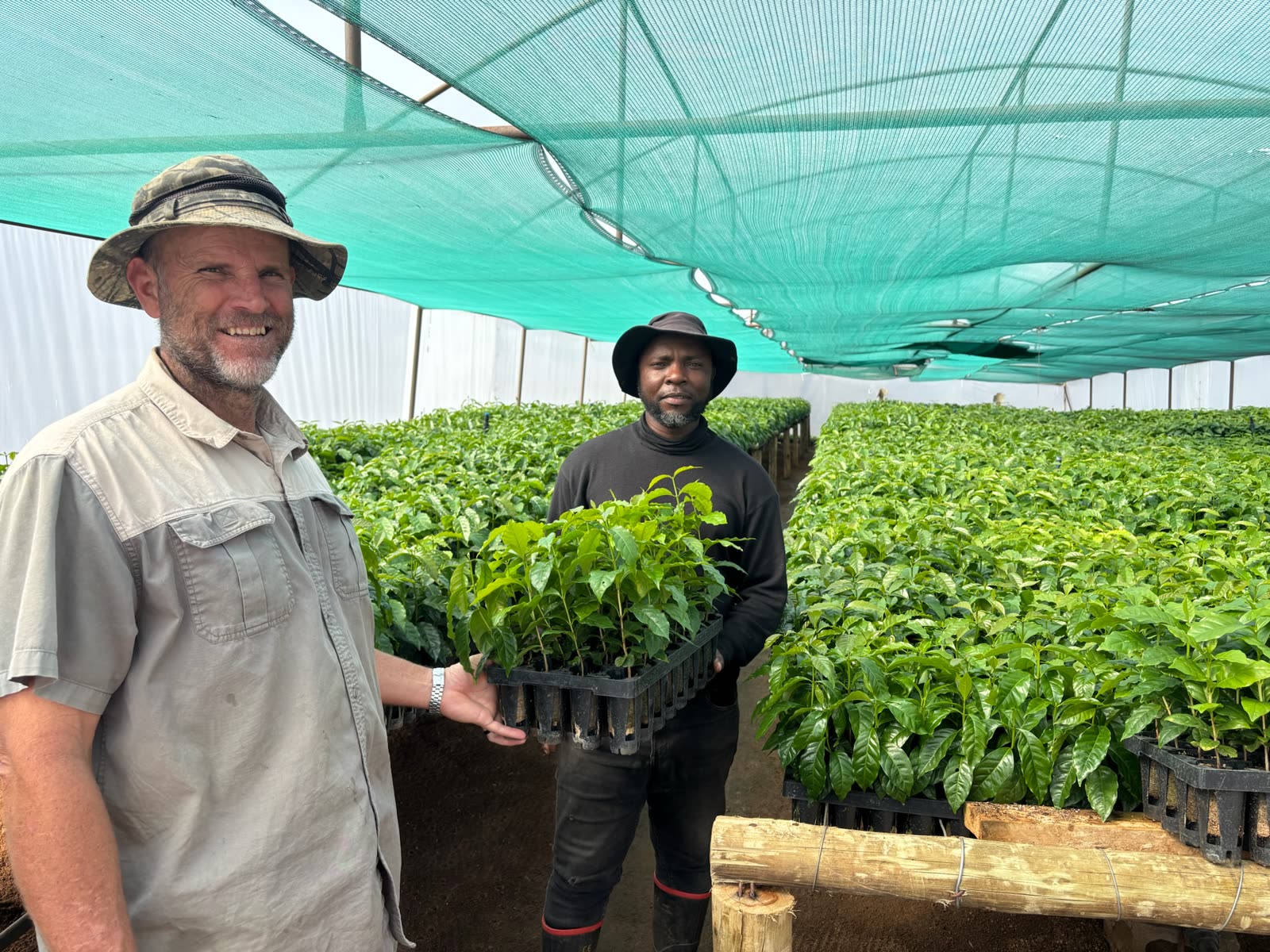
Selected 10-month trees are supplied in trays of 32. Quantities remain subject to final inspection, stock verification and confirmed orders.
Exceptional cup-quality potential for quality-focused and specialty-coffee plantings.
Compact, productive and resilience-led for efficient commercial plantings.
Balanced quality, strong yield, large beans and valuable disease resistance.
10-month established treesCurrent guide price: E65 per treeSubject to availability
The larger purpose
The nursery is where commercial consistency begins. Follow the wider story of land preparation, field establishment and long-term coffee production on the main estate page.
Return to the commercial estate ↗